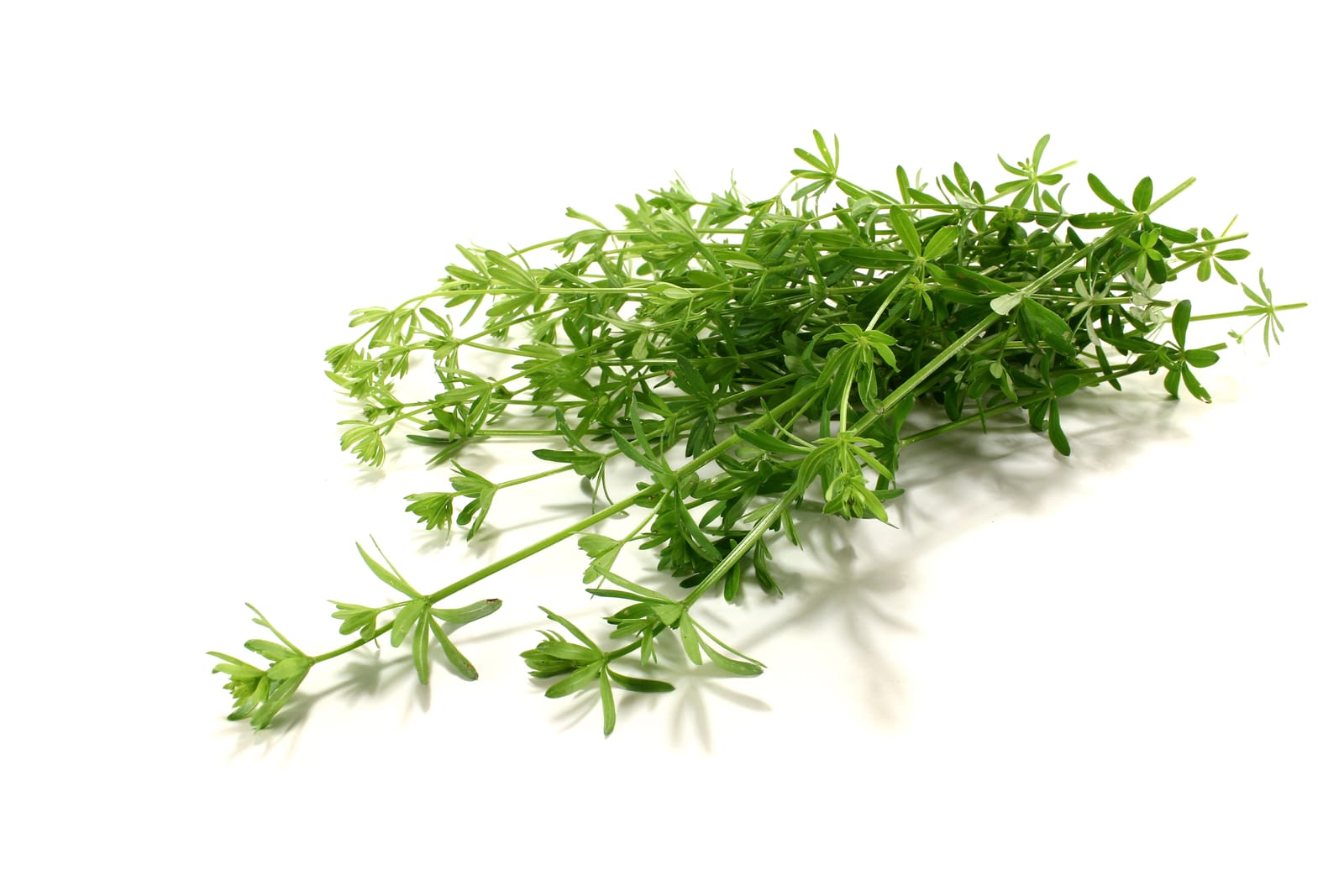
Cleavers (Galium aparine) is one of the easiest wild plants to recognize once you know what to look for. Also called sticky willy, goosegrass, or catchweed bedstraw, this common spring herb has a long history in folk medicine and can also be eaten when harvested young. Its clingy, sticky stems make it memorable in the field, while its fresh green growth makes it useful to foragers seeking an edible wild plant in early spring.
What are Cleavers?
Cleavers is a fast-growing wild plant in the bedstraw family. It often sprawls across hedges, fences, gardens, and woodland edges, using tiny hooked hairs to grab onto nearby plants, clothing, and animal fur. Those same little hooks are what give the plant its famous sticky texture.
The plant is usually found in cool, damp seasons, especially in spring and early summer. It grows quickly, forms long trailing stems, and produces small white flowers followed by round, sticky fruits.
History and Traditional Uses
Cleavers have been used for centuries in European folk herbalism. Traditional herbalists often turned to it as a spring cleansing herb, especially for support with swelling, skin issues, and general “cooling” or clearing formulas. In older herbal traditions, it was sometimes linked with lymphatic support and urinary cleansing.
Beyond medicine, cleavers have also been used in practical, everyday ways. Because of its sticky nature, it has been used as a natural plant filter and even as a rough stuffing material in some historical settings. While these uses are less common today, they show how familiar people once were with this wild plant.
Possible Medicinal Benefits
Cleavers is still valued by herbalists as a gentle spring herb. It is often described as cooling, soothing, and slightly drying, which is why it has traditionally been used in formulas for puffy tissues, irritated skin, and seasonal cleansing.
Common herbal uses include:
- Supporting the lymphatic system.
- Helping with occasional swelling or puffiness.
- Assisting with skin-clearing traditions.
- Providing gentle diuretic support.
- Serving as a fresh spring tonic herb.
It is important to remember that these uses come from herbal tradition, not from modern medical approval. Cleavers should be treated as a folk herb with traditional value rather than a guaranteed treatment.
How to Identify Cleavers
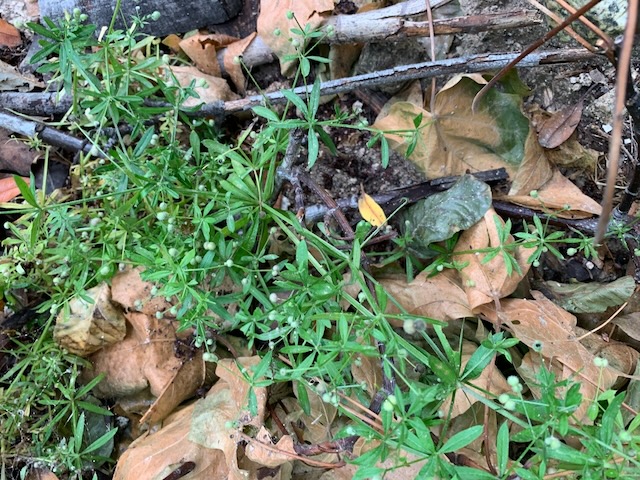
I was at an Airbnb in London that happened to have a backyard. It was early April a few years ago, so there was a chill in the air. As I explored, I found cleavers. In a conversation with the owner, I asked about them. She admitted moving in recently and wanting to expand the garden, but hadn’t done so yet. I told her to definitely look this one up, since they were abundant in her backyard.
Cleavers is easiest to identify by its sticky stems and leaf arrangement. The leaves grow in whorls around the stem, usually in groups of six to eight, giving the plant a star-like look. The stems and leaves feel rough and cling to skin, fur, and fabric.
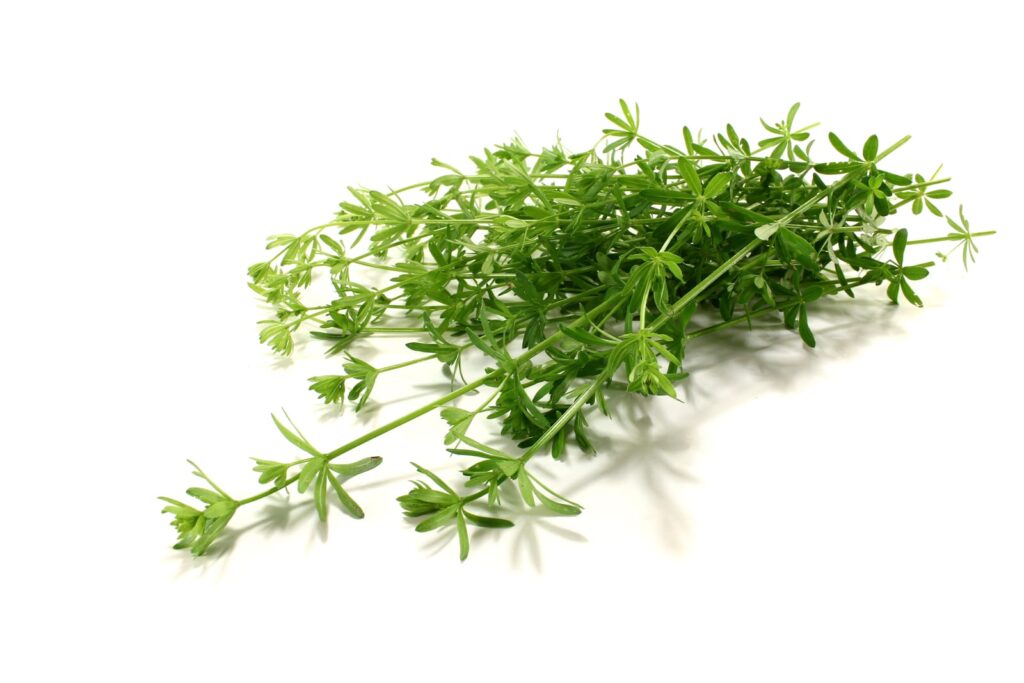
Look for these features:
- Long, weak, trailing stems.
- Whorled leaves around the stem.
- Tiny hooked hairs that make it sticky.
- Small white flowers at the leaf nodes.
- Round, burr-like fruits that also stick to things.
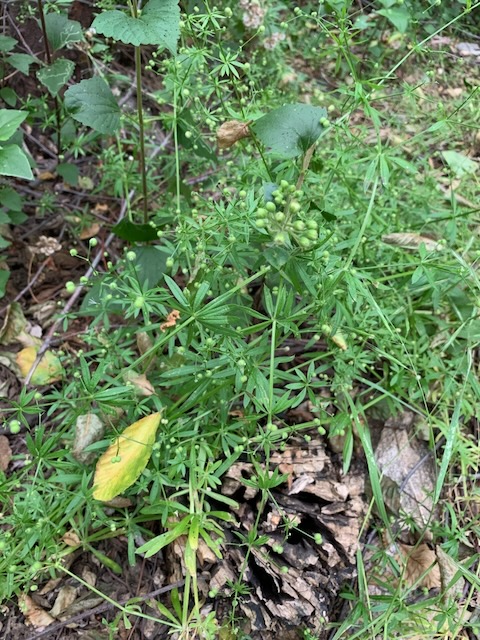
It often grows in tangled mats and can be found in gardens, hedgerows, roadsides, woodland edges, and other disturbed places. Young plants are softest and best for eating.
How to Eat Cleavers
Young cleavers can be used in several simple ways. The tender tops are best, since older plants become more fibrous and stringy.
Good ways to use cleavers include:
- Tossing young tops into salads.
- Blending them into smoothies or green juices.
- Lightly steaming them like other spring greens.
- Adding them to soups or broths.
- Infuse them in cold water or make a mild herbal tea.
If you want the best texture, harvest cleavers early and use only the tender stems and leaves. Once the plant matures, it becomes tougher and less pleasant to eat raw.
Harvesting Tips
Pick cleavers from clean areas away from roads, sprayed lawns, or contaminated soil. As with any wild edible, proper identification matters most before you eat it.
A good rule is to harvest only when the plant is young, vibrant, and clearly matches the cleaver plant you expect. If there is any doubt, do not eat it.
FAQ
Are cleavers edible?
Yes, young cleavers are edible and can be used in salads, teas, smoothies, soups, or lightly cooked dishes.
What does cleavers taste like?
Young cleavers have a mild, fresh, green flavor that works well in spring recipes.
Is cleavers the same as sticky willy?
Yes. Sticky willy, goosegrass, catchweed bedstraw, and cleavers are all common names for Galium aparine.
Can you eat cleavers raw?
Yes, but only when the plant is very young and tender. Older growth is usually too fibrous.
What part of cleavers do you eat?
The young tops, tender stems, and leaves are the best parts to eat.
AI Content Disclosure
This article was written with the help of AI and reviewed for general informational use. While every effort has been made to keep it useful and accurate, wild plant information can vary by region and season. Always verify identification before harvesting or eating any wild plant.